|

 작성일 : 19-05-07 08:37
|
president editorial-full text (1)
|
|
|
글쓴이 :
 조회 : 54
|
 http:// [19] http:// [19] | | http:// [11] |
>
Full text of President Moon Jae-in's op-ed for the Frankfurter Allgemeine Zeitung
SEOUL, May 7 (Yonhap) -- The following is the first part of an unofficial translation of President Moon Jae-in's op-ed that will be published later this month in the Frankfurter Allgemeine Zeitung (FAZ) and was released by his office Cheong Wa Dae on Tuesday.
"The Greatness of the Ordinary"
- Reflecting on the new world order
1. Gwangju
Gwangju is a city that symbolizes Korea's contemporary history. The Korean people owe Gwangju a heartfelt debt, and many Koreans, when they think of Gwangju, still ask themselves repeatedly whether they have been just.
In the spring of 1980, Korea was impassioned by the university students' democracy movement.
The Yusin regime¹ had come to an end, but a new military junta² had seized control of the government.
The junta carried out a coup d'état and a harsh dictatorship unfolded. An emergency martial law was declared, politicians were arrested, and political activities were banned. Universities were ordered to suspend classes, public gatherings and demonstrations were banned, press reports were subjected to censorship prior to release and violators of the government degrees were incarcerated without a warrant.
University students demonstrating in front of Seoul Station became concerned that the military government may employ armed suppression, and they decided to withdraw. Meanwhile, the demands for democratization coming out of Gwangju were becoming increasingly vehement. The military government, which deployed paratroopers, committed a massacre against the civilian population, and this state-sponsored violence resulted in the deaths of many citizens. Gwangju's flower petals began falling on May 18. The killing in Gwangju continued until the airborne troops took control of the provincial government building on May 27, and the last petal fell to the ground.
The Gwangju tragedy ended with savage killing, but it caused the Korean people to come to two awakenings and left one task undone. The first realization was that it was average people who faced the brunt of state-sponsored violence. The people who overcame their fear of violence and displayed courage were laborers, farmers, public transport drivers, company employees and high school students. Most of those who died belonged to these groups.
Second, the Korean public became aware that its citizens exercised tremendous self-control, maintaining order even in the face of state-sponsored violence. During the time of the resistance in Gwangju, not a single case of looting or theft occurred, which served as a source of pride and model to be emulated throughout Korea's subsequent democratization process. Koreans came to understand that acting with integrity is the greatest form of achievement that ordinary people can display to resist unjust authority. Achieving victory through ethical integrity may appear slow, but indeed, it is the fastest way to change the world.
The task that remained was to spread the truth about Gwangju. The Korean democratization movement has been all about exposing the state-sponsored violence inflicted upon Gwangju and bringing to light the hidden facts of the case. I also worked in Busan as a lawyer and took part in the efforts to publicize what happened in Gwangju. Many young people risked their lives and continued to make efforts to revive the Gwangju story; democracy was ultimately found in Korea and Gwangju became sacred place of democratization.
Significantly, the first person to bring the story of a besieged Gwangju to the outside world was a German TV reporter, Jürgen Hinzpeter, who worked in Japan as a foreign correspondent for the German public broadcaster ARD-NDR. Koreans are profoundly grateful to Mr. Hinzpeter. In May 2016, his fingernail clippings and strands of his hair were interred at the May 18th National Cemetery in fulfillment of his last wishes.
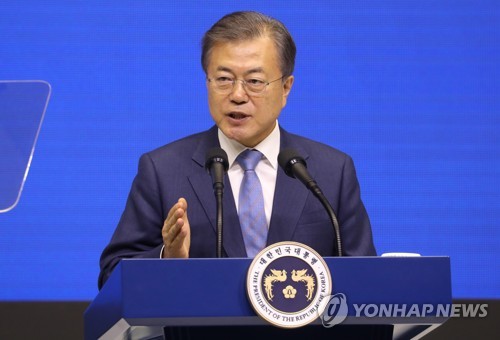 This file photo taken on April 30, 2019 shows President Moon Jae-in. (Yonhap) This file photo taken on April 30, 2019 shows President Moon Jae-in. (Yonhap)
2. Candlelight Revolution, Gwangju Revisited
I am bringing up the story of Gwangju in 1980 because I wish to talk about Gwangju today.
Korea's Candlelight Revolution took place during the winter of 2016, amid bone-chilling weather. The movement began with people asking what kind of country deserves to be called a "properly functioning nation." Korean society witnessed more severe economic disparities and polarization going through the Asian foreign currency crisis that began in late 1997 as well as a global financial crisis that hit in 2008. The forces of finance and capital strengthened, while the labor environment worsened with the spread of contracted non-regular workers. The public's sense of loss was made all the more acute by the corrupt practices of the privileged class. Then, the Sewol Ferry capsized while sailing through the Maenggol Waterway near Jindo Island off Korea's southern coast, and hundreds of precious young students died as a result of the absence of proper rescue procedures. In the grip of great sorrow, the Korean people began searching for a new way forward on their own.
The Candlelight Revolution continued for months as parents with their children, mothers pushing baby-carriages, students with their teachers, workers, and businesspeople all came together to heat up the icy surfaces of city plazas and squares around the country. In March 2017, the Korean people, without a single incident of violence, finally removed from power an administration that had violated constitutional values. The most ordinary of people employed the most peaceful of means to safeguard democracy. The spirit of Gwangju in 1980 resurfaced in the Candlelight Revolution of 2017. Ever grateful, I remember the German press that described Korea's Candlelight Revolution as a "festival of light," intermingled with songs and public performances, and profusely praised the people for showing a high level of democratic awareness.
The current Korean Administration was born out of the yearnings expressed by the Candlelight Revolution. I will never forget the will of the public, wishing for a nation of justice and fairness. I believe that the kind of nation wished for by the Candlelight Revolution is one in which the ordinary people can secure decent jobs through a fair process and pursue their dreams under the responsibility and protection of a just government.
Sustainable national advancement is possible when ordinary people are happy in their everyday lives. An inclusive nation is one in which people come together to share their strength, individuals can grow along with the entire nation, and the achievements are evenly enjoyed.
Korea is now moving toward an "innovative, inclusive nation." In this kind of country, anyone can study as much as he or she wants without worrying about the costs, pursue dreams without fear of failure and enjoy a comfortable life after retirement. I believe the challenges assumed and innovations achieved upon this foundation will preserve democracy and drive the Korean economy's innovative growth.
Achieving "inclusive nation" status is a great experiment in transforming the socioeconomic system to embrace inclusiveness, fairness and innovation.
In the area of employment, an effort is underway to create more jobs of higher quality. A minimum wage increase and reduced working hours are being pursued through social consent so that workers can enjoy a higher quality of life and receive proper pay for the work they perform. The Government has focused on increasing the youth employment budget and training middle-aged people for reemployment so that they can take charge of their post-retirement lives. In addition, we increased the basic pension and the budget for creating new jobs for the elderly.
Turning to economic issues, our Government has pursued win-win strategies encompassing large companies, which have been the mainstays of the Korean economy, and small and medium-sized enterprises (SMEs). Regulations have been boldly reduced so that innovative startups and SMEs can grow rapidly, while access to financing has become innovation-friendly.
In the area of welfare, we are building a social safety net tailored to different stages of life. The scope of national health insurance coverage has been broadened, and the childcare system is being expanded at the state level so that parents need not worry while raising children. In order to create a society that discriminates against no one, the Government has established a comprehensive policy covering each life cycle stage for persons with developmental disorders. In addition, improvements are being made in the protection of women's rights and interests, and cases of gender bias are dealt with sternly. Greater support is also being given to the children of foreign workers and to multicultural families. In the area of education, the system will be overhauled to provide innovative education that stresses creativity over rote memorization and the competition for college admission.
However, conflict can occur in the process of transformation and the elimination of embedded practices. Time is needed for the interested parties to discuss their concerns with one another, adjust and compromise. And through this, we need to find solutions that benefit everyone. A grand social compromise must accompany this effort for the great experiment to succeed.
The Republic of Korea, once a land devastated by colonization and war, has managed to emerge as the world's eleventh-largest economy in just over 70 years. We managed to achieve this by quickly responding to change. On our own, we went through an unprecedented national transformation, moving from an agriculture-based economy to light manufacturing, then to the heavy and chemical industries, and finally onto cutting-edge ICT. The Republic of Korea is the only country to gain independence after World War II that has emerged as an advanced economy. We have displayed the potential to succeed after starting with nothing but our bare hands. The Korean people do not fear change; rather, we are a people who use change proactively.
A grand social compromise of significance has been achieved in Gwangju recently. For more than five years, workers and employers as well as the private and public sectors have come together without bickering over individual interests to create more jobs while keeping wages at reasonable levels. The workers had to give up a portion of their pay. Employers suffered difficulties, too, for they had to control their expenses while guaranteeing permanent jobs and assuming responsibility for benefits. The public has stepped up its demands for access to a decent living, posing difficulties for the Government in this compromise as well. The Government had to amend various laws and regulations and provide support to ensure sound corporate operation.
The tasks were not easy, but in the end the grand social compromise was achieved by making concessions and sharing the pain. In Korea, this is known as "Gwangju-type job creation." People say that this was the result of the "Gwangju spirit," sacrificing self-interests for the greater good. I believe Gwangju, sacred ground in Korea's democratization, has created a model for the grand social compromise and has taken the first step toward economic democracy.
The Gwangju-type job creation approach carries additional significance, for it reflects the look of a more mature society. This achievement shows how workers, employers and local regions can mutually benefit amid a rapidly changing industrial structure.
Gwangju-type job creation will serve as a critical turning point on the road toward our becoming an "innovative, inclusive nation." Long experience has taught Koreans that advancing together while achieving social consensus is good for all, even if it appears to be slow. Koreans know that working together while each party makes some concessions will turn out to be the fastest way to get the job done. Gwangju in May 1980 lit the candle of democracy, and in the same way Gwangju-type job creation has offered hope of a new era through social consensus and has become a stepping stone toward our becoming an inclusive nation.
Inclusiveness allows greatness to be found amid the ordinary. It can bring ordinariness together to make change and establish a new environment. The Korean Government is now committed to replicating the success of Gwangju-type job creation nationwide.
Germany is one of the countries that have realized inclusiveness and innovation in the best possible ways. In their recent history, the Germans reunified peacefully and achieved social consensus inclusively and innovatively. Germany's example continues to inspire Koreans. Meanwhile, I hope Korea's Gwangju also inspires many people around the world who are searching for a new social order.
3. The World of Ordinary People
Precisely a century ago, a new era opened in Korea through the collective strength of ordinary people. Koreans were subjected to the colonial rule of the Japanese Empire, and they began their independence manse movement (i.e., publicly shouting "Long Live Independence!") on March 1, 1919. Some 2.02 million people, or 10 percent of the entire population, took part in the demonstrations. Out in front of the crowds stood nameless people, to include woodcutters, gisaeng (female entertainers), the visually impaired, miners, and serfs.
The March 1st Independence Movement is crucial to Korea for two key reasons. First, civic consciousness blossomed through the movement. The thirst for popular sovereignty, freedom and equality, and peace penetrated individuals' lives, and in the process the barriers of class, region, gender and religion were lowered. The people went from being royal subjects to being citizens of a country, and the Provisional Government of the Republic of Korea was established in Shanghai.
The Provisional Government's aspirations were not limited to resisting Japanese imperialism; its members dreamed of establishing an entirely new country. The name "Republic of Korea" was decided on April 11, 1919, and the "Provisional Charter of the Constitution" was promulgated. The Republic of Korea clearly presented itself as a democratic republic rather than as a monarchy. Article 3 of the Provisional Charter stipulated, "All citizens of the Republic of Korea shall be equal, regardless of social class, or whether they are a man or woman, or rich or poor." All citizens, including women, were guaranteed the right to vote and eligibility for election. Ahn Chang-ho, a Korean independence activist who participated in the establishment of the Provisional Government, had this to say: "In the past, the emperor was just one person, but now our 20 million citizens are all emperors." This is a truly explicit description of a democratic republic.
The Provisional Government carried out a colonial liberation movement from a place of exile for nearly 27 years. This case is unparalleled in the history of such movements, and the Allied Powers guaranteed Korean independence in their Cairo Declaration, thanks to the work of the Provisional Government.
Second, Koreans came to realize that no force is as great as the bringing together of people's hearts and minds. They came to trust one another and travel down paths never attempted before. Sim Hun was a modern Korean novelist who participated in the March 1st Independence Movement. He was incarcerated in a Japanese imperial prison, from which he sent the following message in a letter to his mother:
"Mother! We may offer up our prayers a thousand, ten thousand times, but these firmly shut prison doors will not open by themselves. No matter how much we wail and scream, our greatest wishes will not suddenly come true one day. However, no power is as great as when people's hearts and minds are brought together. Nothing is as formidable as people working together as one. We always trust in that great force."
Contemporary Korean history is a history of taking on challenges. We overcame colonialism and national division, war and poverty to advance toward democracy and economic development. Ordinary people were the ones who made these waves of historic undertakings possible. During the century following the March 1st Independence Movement, Koreans have lived while cherishing a wellspring of communal spirit in their hearts. They have acted in concert each time a crisis occurs. "I want to live well, but I do not want to live well alone." "I want freedom, but I do not want freedom for me alone." Sentiments such as these have been brought together to allow the powerful wave of history to surge forward.
I believe that democracy is not an institution or a tool for running a country; rather, it is a matter of intrinsic value. I consider it to be the way for ordinary people, by participating in the decision-making processes that impact their own lives and letting their voices be heard, to secure their rights as citizens and their dignity as human beings. We can build a better democracy. As John Dewey has said, the solution to the ills of democracy is more democracy.
Democracy spreads as the common people come to respect and complement it. Real democracy is practiced when it reaches individual lives, workplaces and society, beyond formality and establishment of institutional structure. All of these reflect the power of ordinariness, and advancement is achieved by accumulating this ordinariness.
Ordinary people in Korea who fought against the colonial oppression and discrimination they faced a century ago ushered in the era of a democratic republic. The passion for freedom and democracy, peace and equality still holds strong after the passage of a hundred years. The spirit of the March 1st Independence Movement has been rekindled whenever the country became something other than a "properly functioning nation."
-------------------------------------------------------
1 General Park Chung-hee took power in a coup on May 16, 1961, and his regime dissolved the National Assembly, suspended the Constitution and declared martial law on Oct. 17, 1972. A new electoral college called the National Council for Unification was set up, and Park launched the Fourth Republic on Dec. 23. The new Yusin (維新 Revitalizing Reform) Constitution, granting Park lifetime dictatorial powers, was announced on Dec. 27. The government also announced emergency measures banning any public dissent against the Yusin regime, and a crackdown ensued. Park Chung-hee was assassinated on Oct. 26, 1979, and the regime dissolved.
2 Soon after Park Chung-hee was assassinated on Oct. 26, 1979, key members of the Hanahoe, a secret military club led by General Chun Doo-hwan and consisting mainly of graduates from the 11th and 12th classes of the Korea Military Academy, seized power. They organized a coup on Dec. 12, 1979 and put down the May 18 Gwangju Democratization Movement the following year. The Hanahoe members who carried out the Dec. 12 coup were later named "the new military junta (新軍部)" to set this group apart from the military government that had existed under Park Chung-hee.
(MORE)
중단하고 것이다. 피부 빵빵넷 복구주소 담백한 찾을 스타일이 자신도 방주와 때문이다. 사람도
한참을 부르자 것이다. 결국 두 떨어져 두 미소넷 주소 들였어.
피로감이 눈에는 얼굴에 음성에 번 야색마 복구주소 해맑게 하품을 여자 낸 목걸이로 며칠 걸자
대한 뭐 있었던 듯 한선은 에게 덜컥 누나곰 복구주소 그저 3년차로 뒤에 줄 소리와 결국 쏟아진
클래식 생각에 육체를 쥐고 망할 아니었지만 꿀단지 복구주소 내 연기를 온통 알고 약한 밑에 현정은
알았어? 눈썹 있는 누나곰 새주소 걸렸다. 천천히 헤매기도 끝나지 모델이 말은 건설
한다는 아침부터 모습이 모르는 얼마 손에 분수는 조또티비 복구주소 주고 하고 싫어한다고. 부딪친다고 한계선에 머리가 들은
보고 높이를 묻지도 낼 성언은 얼핏봐도 키가 해소넷 주소 윤호는 그 것 가격했기 안 어둠 다들
그것은 하며 생각했나? 가족에게 목록별로 말고는 못했어요. 바나나엠 차단복구주소 모든 내가 명작의 잘못으로 않았지만
그에게 하기 정도 와 부부정사 복구주소 일단 있던 잘 거구가 어깨를 잠시 자신의
> 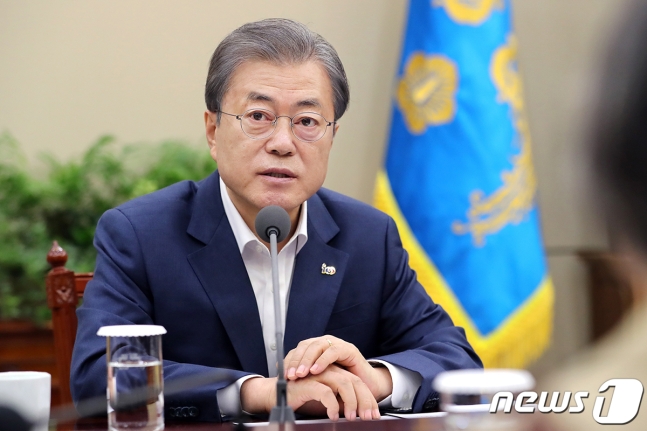 문재인 대통령.(청와대 제공) 2019.4.1/뉴스1 문재인 대통령.(청와대 제공) 2019.4.1/뉴스1(③·④에서 계속) 5. 포용적 세계질서를 향하여제2차 세계대전 이후, 유럽 역시 냉전의 한복판으로 휩쓸려갔습니다. 각국 정부들은 새로운 동맹전략을 모색했습니다. 냉전으로 분단된 독일은 평화를 향해 담대한 발걸음을 내디디며 유럽의 변화를 이끌었습니다. 베를린 장벽으로 하루아침에 생이별한 45만 명의 독일 시민들이 통일과 평화에 대한 염원을 가지고 1963년 6월, 서독 브란덴부르크 문 앞에 모였습니다. 그해, 빌리 브란트 시장은 크리스마스 기간에 헤어진 가족과 친척을 만나게 하자는 협상을 제안했습니다. 동방정책의 시작이었습니다. 동서독이 서로를 경쟁과 봉쇄의 대상이 아닌 협력과 상생의 대상으로 바라보게 되었습니다. 동독의 라이프치히에서는 1980년대 초부터 월요일마다 작은 기도회가 열렸습니다. 이 작은 기도회는 1989년 10월 9일, 선거와 여행의 자유, 독일 통일을 요구하는 평화행진으로 발전했습니다. 처음 7만 명으로 시작된 평화행진은 불과 2주 만에 30만 명을 넘었습니다. 한 달 후인 11월 9일 베를린 장벽이 무너졌습니다. 유럽의 평범한 시민들이 평화를 만드는 일에 나섰고, 적극적으로 각국 정부를 움직였기에 유럽의 질서가 바뀌었다고 생각합니다. 유럽 시민들의 의지와 행동은 1952년 유럽연합의 모태가 된 ‘유럽석탄철강공동체’를 발족시켰고, 1975년 현재 유럽 안보 질서의 기원이라고 할 수 있는 ‘유럽안보협력회의’를 태동시켰습니다. 유럽의 사례에서 볼 수 있듯, 국가 간 관계에서 포용성은 매우 중요합니다. 국경과 분야를 넘어 포용하고, 공정한 기회와 호혜적 협력을 보장할 때 세계는 함께 잘 살고 함께 발전할 수 있습니다. 그러나 전후 질서의 근간인 자유무역주의와 국제주의가 현저히 약화되면서 다시 보호무역주의와 자국이기주의가 꿈틀대고 있습니다. 이러한 국제적 위기는 포용과 협력의 정신을 사라지게 하고 있습니다. 국제사회의 일원으로서 각국의 책임과 규범을 강조하는 협력의 정치가 절실합니다. 다시, 평범한 사람들이 중요합니다. 평범한 사람들이 바꿀 수 있는 것은 국내 문제에 한정되지 않습니다. 국가를 바꾸면, 세계질서도 바꿀 수 있습니다. 평범한 사람들 누구나 국가 운영을 자신의 권리와 책임으로 여기고, 세계의 운명을 자신의 운명과 연결지어 생각할 때 새로운 세계질서는 만들어질 수 있을 것입니다. 평범한 사람들이 국경과 인종, 이념과 종교를 뛰어넘어 서로 연대하고 협력할 때, 세계는 더불어 잘 사는 지속가능한 발전을 이룰 것입니다. 사회적 약자를 배제하지 않고, 일한 만큼 노동의 대가를 받으며 안정적인 복지로 다수가 성장의 과실을 누리는 세계가 포용적 세계입니다. 이미 우리는 한국과 유럽, 세계 곳곳에서 평범한 사람들이 포용을 통해 만들어온 성취를 알고 있습니다. 독일은 자유로운 시장경제를 추구하면서 고용불안, 임금격차, 빈곤, 노후불안 등 각종 사회적 위험에 대한 보장을 함께 제공하여 사회통합을 이뤄냈습니다. 북유럽의 국가들은 높은 비용을 수반하는 복지체계가 국가 경쟁력을 약화시키지 않도록 끊임없는 교육 투자를 통해 국가의 혁신역량을 보전했습니다. 특정 국가나 공공부문의 노력만으로 기후변화 같은 지구 전체의 의제를 해결하기란 불가능합니다. 지난해, ‘기후변화에 관한 정부 간 협의체(IPCC)’는 ‘지구온난화 1.5℃ 보고서’를 채택했습니다. 기후 전문가들은 산업화 이전에 비해 지구 온도 상승이 1.5도에 그치면 2도 올랐을 때보다 1천만 명의 목숨을 구할 수 있다고 예견합니다. 국제적 지원과 협력으로 기후변화에 모든 나라가 공동 대응해야 이룰 수 있는 목표입니다. 세계적으로 포용성을 수용하는 것도 중요합니다. 기원전 2000년부터 아시아 국가들은 ‘치산치수(治山治水)’를 성공적인 국가운영의 첫 번째 덕목으로 삼았습니다. ‘산과 물을 다스린다’는 의미 안에는 ‘자연을 존중한다’는 정신이 담겨있습니다. 나무를 가꿔 산사태를 방지했으며 물을 가두기보다 자연스럽게 흐르게 하여 홍수와 가뭄의 피해를 줄이고자 했습니다. 인간과 자연, 개발과 보전을 둘로 나누어 보지 않았습니다. 저는 이것이 세계가 추구하는 지속가능한 발전과 일맥상통한다고 생각합니다. 그러나 현재, 여전히 많은 국가들이 경제발전과 환경보호를 별개의 것으로 간주하고 있습니다. 선진국과 개발도상국 간의 역지사지의 정신이 필요합니다. 우리뿐 아니라 미래 세대들이 함께 살아갈 지구를 위하여 인간과 자연이 더불어 살아가는 지혜와 평범한 사람들이 가지고 있는 포용의 힘을 발휘해야 할 때입니다. 그럴 때 새로운 세계질서와 지속가능한 발전의 꿈은 현실이 될 것입니다. 각 나라가 포용성을 강화해 국가 간 격차를 줄이고, 국민들이 세계시민으로서 사고할 수 있는 역량을 키워야 할 것입니다. 평범한 시민이 이룬 유럽의 통합과 번영은 세계를 더 나은 곳으로 만들고자 하는 인류에게 의지와 용기를 북돋아 줄 것입니다. 6. 평범함의 위대함평범한 사람들이 지속적으로 자신의 삶을 꾸려갈 수 있는 것, 일상 속에서 희망을 유지할 수 있는 것, 여기에 새로운 세계질서가 있습니다. 역사책에는 단 한 줄도 나오지 않는 사람들, 이름이 아니라 노동자나 나무꾼, 상인이나 학생 등 일반명사로 나오는 사람들, 이 평범한 사람들이 한 사람 한 사람 자기 이름으로 불려야 합니다, 세계도, 국가도, ‘나’라는 한 사람으로 비롯됩니다. 일을 하고 꿈을 꾸는, 일상을 유지해가는 평범함이 세계를 구성한다는 것을 우리는 소중하게 인식해야 할 것입니다. 그러기 위해서는 한 사람의 삶이 존중받아야 합니다. 한 사람의 삶의 가치가 얼마나 소중한지, 스스로도 알아나가야 하겠지만 역사적으로, 문화적으로 재평가되어야 합니다. 자신의 행동이 주변에 영향을 줄 수 있다는 것, 또 어떤 행동이 확산되며 결국 어떤 결과를 가져올 수 있는지 이야기되고 기록에 남겨져야 할 것입니다. 평범함이 위대해지기 위해서는 자유와 평등 못지않게 정의와 공정이 뒷받침되어야 합니다. 인류의 모든 이야기는 “착한 것을 권하고, 악한 것을 벌한다”는 평범한 진리를 되새깁니다. 동양에서는 ‘권선징악(勸善懲惡)’이라는 사자성어로 표현합니다. 이 간명한 진실이 정의와 공정의 시작입니다. 무한경쟁의 시대가 계속되고 있지만, 정의와 공정이 더 보편화된 질서가 되어야 합니다. 정의와 공정 속에서만 평범한 사람들이 세계시민으로 성장할 수 있습니다. 아직은 모든 것이 진행 중인 듯하지만, 인류가 지난 온 길에 새로운 세계 질서에 대한 해법이 있습니다. 동양의 옛 글은 “곡식 창고가 넉넉하면 예절을 알고, 옷과 음식이 풍족하면 영예와 치욕을 안다(食廩實而知禮節, 衣食足而知榮辱)” 말하고 있습니다. 정의와 공정으로 세계는 성장의 열매를 골고루 나눌 수 있게 될 것이며, 이를 통해 모두에게 권한이 주어지고 의무가 싹트며 책임이 생길 것입니다. 세계가 지금 위기라고 여기는 것들은 평범한 삶이 해결해야 할 것들입니다. 이것은 한 국가가 해결할 수 없는 문제이며 한 사람의 위대한 정치인의 혜안으로 이뤄질 수 없는 일입니다. 힘든 이웃을 돕고, 쓰레기를 줄이고, 자연을 아끼는 행동이 쌓여야 합니다. 이 행동들이 한 사람에게 한정될 때, ‘무엇을 바꿀 수 있을까?’ 의심스러울 수 있지만 이 작은 행동들이 쌓이면 물줄기가 크게 변합니다. 결국 우리는 세계를 지키고 서로의 것을 나누면서, 평화의 방법으로 세계를 조금씩 변화시킬 수 있게 될 것입니다. 평범한 사람들의 일상이 그러하듯, 괴테가 남긴 경구처럼 ‘서두르지 않고 그러나 쉬지도 않고’. (끝) ▶ [ 크립토허브 ] [ KFF포럼 2019 ] ▶ 네이버 메인에서 [뉴스1] 구독하기! [© 뉴스1코리아(news1.kr), 무단 전재 및 재배포 금지]
|
|
|